AI Marketing Budget Planning 2026: How to Allocate Every Dollar with Data
AI Marketing Budget Planning 2026: How to Allocate Every Dollar with Data
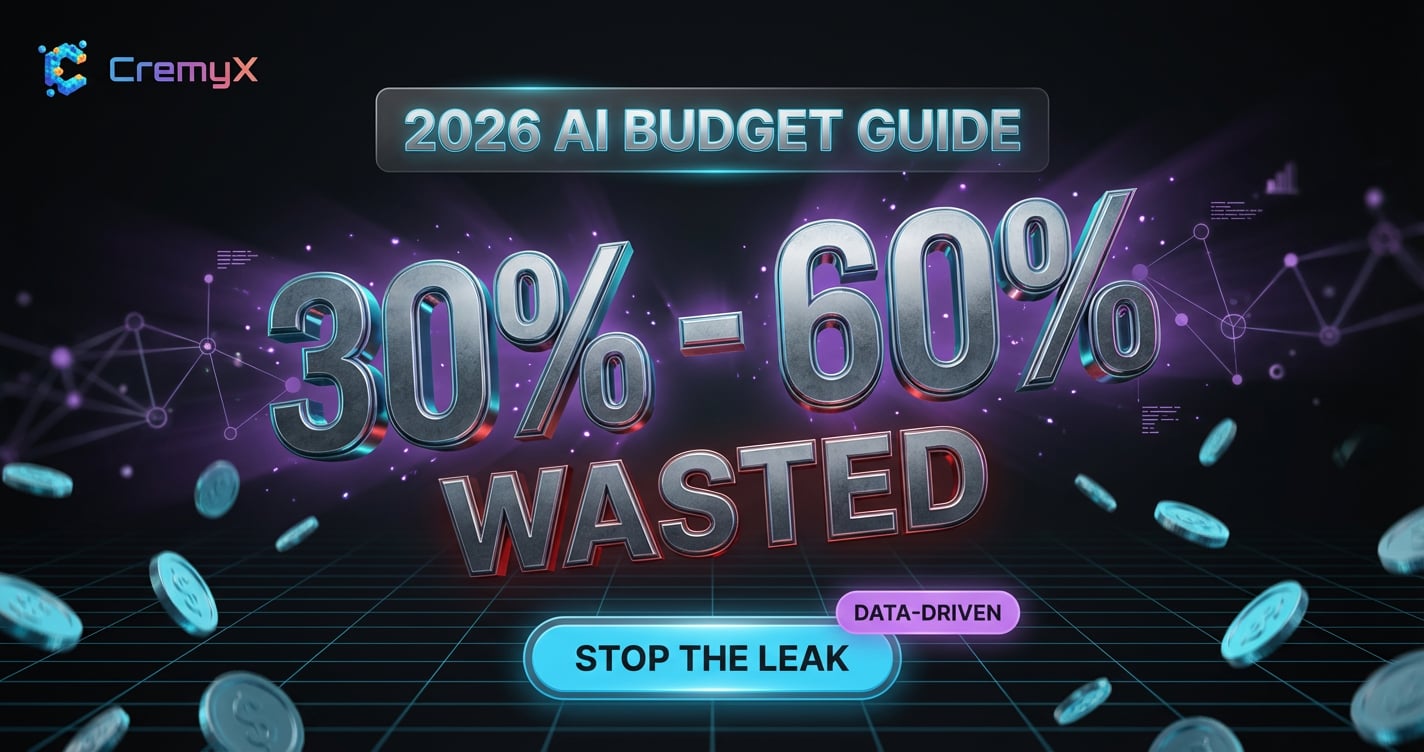
Here's a hard truth: a staggering portion of marketing budgets worldwide vanishes without a trace. While marketers pour billions into campaigns, industry reports consistently show that between 30% and 60% of marketing spend is wasted annually. Imagine if your carefully crafted 2026 budget, designed to fuel growth and innovation, was destined to lose more than half its value before it even hit the market. It's not just a hypothetical; it's a persistent, multi-trillion-dollar problem that traditional budgeting methods have failed to solve. But what if there was a way to not just stem the tide of waste, but to actively ensure every dollar you allocate generates measurable, predictable ROI? Welcome to the era of AI-driven marketing budget planning.
TL;DR: Your 2026 AI Budget Blueprint
The marketing landscape is plagued by significant budget waste, with up to 60% of spend yielding no measurable return. Traditional budgeting falls short, but Artificial Intelligence (AI) offers a paradigm shift.
This article provides an expert-level guide to AI Marketing Budget Planning for 2026, focusing on data-driven allocation. We introduce a 5-step AI Budget Allocation Framework and the "Zero-Based AI Budgeting" method to eliminate waste and maximize ROI.
Key takeaways include:
- Understanding the multi-trillion dollar problem of marketing waste.
- Leveraging AI for predictive channel performance and optimized spend.
- Detailed 2026 channel ROI benchmarks and budget allocation tables by business size.
- Insights into how 500+ marketers are spending in 2026.
- Identifying AI tools, like CremyX, that automate budget optimization and dramatically reduce costs, especially for content marketing.
Prepare to transform your marketing budget from a guessing game into a precision-guided growth engine.
The $4.7 Trillion Problem: Why 60% of Marketing Budgets Are Wasted
In 2023, global marketing spend surpassed an estimated $1.5 trillion, projected to hit nearly $2 trillion by 2026. Yet, according to a recent Gartner study, an average of 57% of marketing budgets are underutilized or wasted due to poor targeting, ineffective strategies, lack of measurement, and siloed operations. Other reports, like those from Nielsen, put the figure even higher for certain industries. When extrapolated across the entire global marketing spend, this represents a staggering annual waste of potentially $4.7 trillion over the next few years.
Why does this happen? The reasons are multifaceted:
- Lagging Data Analysis: Traditional budgeting often relies on historical data that's outdated by the time decisions are made, failing to account for real-time market shifts, competitor actions, or emerging consumer behaviors.
- Siloed Channel Performance: Marketers often manage channels in isolation, making it difficult to understand the synergistic or cannibalistic effects of spending across different platforms.
- Inefficient Campaign Optimization: Without dynamic, real-time adjustments, campaigns can underperform for days or weeks before manual intervention occurs, burning through budget unnecessarily.
- Lack of Predictive Insights: Most traditional methods are reactive, not proactive. They tell you what happened, not what will happen if you allocate X to Y.
- Human Bias: Budget decisions can be influenced by personal preferences, past successes (even if not replicable), or internal politics rather than purely objective data.
This immense waste isn't just about lost dollars; it's about lost opportunities, stunted growth, and diminished competitive advantage. The good news? AI is rapidly emerging as the antidote to this endemic problem, providing a level of precision, foresight, and optimization previously unimaginable.
The AI Budget Allocation Framework (5-Step Methodology)
To combat budget waste and maximize ROI in 2026, we propose a robust, AI-powered framework that moves beyond gut feelings and spreadsheet estimates.
Step 1: AI-Driven Performance Auditing & Baseline Establishment
- Objective: Understand past performance with unbiased, AI-powered analysis.
- Action: Feed all historical marketing data (campaign spend, impressions, clicks, conversions, customer lifetime value, attribution models) into an AI analytics platform. AI algorithms will identify true ROI across channels, campaigns, and audience segments, factoring in complex attribution paths that human analysis often misses.
- AI Output: A granular breakdown of what worked, what didn't, and the actual cost-per-acquisition (CPA) and customer lifetime value (CLV) for each marketing effort. This baseline sets the stage for future predictions.
- Data Point: Companies using AI for marketing analytics report a 2.5x increase in identifying high-performing segments compared to manual methods.
Step 2: Predictive Modeling & Scenario Planning
- Objective: Forecast future channel performance and simulate budget outcomes.
- Action: Utilize AI's predictive capabilities to model various budget allocation scenarios. Input market trends, competitor activity, economic forecasts, and your business goals. AI will simulate the likely ROI, CPA, and overall impact of different spending mixes across channels.
- AI Output: A series of "what-if" scenarios, showing the projected outcomes for different budget distributions. For example, "If we increase SEO spend by 15% and decrease paid social by 5%, we project a 12% increase in organic traffic and a 3% decrease in overall CPA."
- Data Point: AI-powered predictive models can forecast campaign performance with an average accuracy of 88% up to 6 months in advance.
Step 3: Dynamic Allocation & Real-time Optimization
- Objective: Implement the budget with flexibility and continuous improvement.
- Action: Don't set it and forget it. AI platforms continuously monitor campaign performance against initial projections. If a channel is underperforming or overperforming, the AI can recommend or even automatically reallocate budget to optimize for your defined KPIs.
- AI Output: Real-time alerts, automated budget shifts, and dynamic bidding adjustments across platforms to ensure every dollar is working as hard as possible. This might mean pausing an underperforming ad set and moving its budget to a high-converting email segment.
- Data Point: Dynamic budget allocation driven by AI can improve campaign efficiency by 15-25% compared to static budgets.
Step 4: Cross-Channel Attribution & Synergy Analysis
- Objective: Understand the true value of each touchpoint in the customer journey.
- Action: AI excels at multi-touch attribution, moving beyond simplistic "first-click" or "last-click" models. It can identify the complex interplay between channels – how a social media impression influences an email open, which then leads to a search, and ultimately a conversion.
- AI Output: A comprehensive understanding of which channels contribute at each stage of the funnel, allowing for more intelligent budget distribution that accounts for synergistic effects. This prevents defunding channels that act as crucial "assists" even if they don't directly close the sale.
- Data Point: Advanced AI attribution models reveal up to 30% more effective budget shifts by identifying hidden channel synergies.
Step 5: Continuous Learning & Iteration
- Objective: Foster an always-optimizing budget strategy.
- Action: AI learns from every campaign, every data point, and every market shift. Over time, its predictions and recommendations become even more accurate and refined. Regularly review AI insights and adapt your strategic goals based on its evolving understanding of your market.
- AI Output: Increasingly precise budget recommendations, refined audience targeting, and a deeper understanding of market dynamics, ensuring your 2026 budget isn't just a plan, but a living, evolving strategy.
- Data Point: AI models achieve self-improvement rates of 5-10% quarter-over-quarter in budget optimization accuracy.
Channel ROI Benchmarks 2026: Allocate for Impact
Understanding the potential return on investment for various marketing channels is crucial for informed budget allocation. While actual ROI will vary significantly based on industry, target audience, and execution quality, these 2026 benchmarks, enhanced by AI's ability to optimize within them, offer a starting point for your planning.
| Marketing Channel | Estimated ROI Range (2026, AI-Optimized) | Typical CPA Range (2026, AI-Optimized) | Key AI Optimization Levers |
|---|---|---|---|
| Social Media Marketing (Organic) | 2x - 5x (Brand building, engagement) | $0.50 - $5.00 (Engagement) | Content calendar automation (like CremyX), audience segmentation, sentiment analysis, trend prediction. |
| Social Media Marketing (Paid) | 3x - 10x (Direct response, lead gen) | $10 - $75 (Lead gen) | AI-driven ad creative generation, real-time bidding, audience lookalikes, predictive budget shifting across platforms. |
| Search Engine Optimization (SEO) | 5x - 15x (Long-term, compounding) | $50 - $200 (Organic lead) | AI for keyword research, content gap analysis, SERP feature optimization, technical SEO audits, predictive content strategy. |
| Email Marketing | 25x - 45x (High-intent, retention) | $1 - $10 (Conversion) | AI for segmentation, personalization (dynamic content), send time optimization, subject line generation, churn prediction. |
| Paid Search (PPC) | 2x - 8x (High-intent, immediate) | $20 - $150 (Lead/Conversion) | Automated bid management, negative keyword identification, ad copy optimization, landing page scoring, budget forecasting. |
| Content Marketing | 4x - 12x (Authority, lead nurturing) | $20 - $100 (Qualified lead) | AI content ideation, drafting assistance, performance prediction, repurposing, distribution optimization, content calendar automation. (This is where CremyX excels, driving 73% lower cost-per-post). |
| Influencer Marketing | 2x - 7x (Awareness, trust) | $50 - $500 (Engagement/Lead) | AI for influencer identification, fraud detection, campaign performance prediction, audience overlap analysis, sentiment tracking. |
Note: ROI and CPA figures are illustrative and represent potential outcomes with advanced AI optimization. Your actual results may vary.
Budget Allocation by Business Size
The optimal budget mix isn't one-size-fits-all. Business size, resources, and growth stage significantly influence where marketing dollars should be allocated. AI helps tailor these allocations further, but here's a general guide for 2026:
| Marketing Channel | Startup (<$10K/mo Marketing Budget) | SMB ($10K-$50K/mo Marketing Budget) | Enterprise (>$50K/mo Marketing Budget) |
|---|---|---|---|
| Social Media (Organic) | 25% | 15% | 10% |
| Social Media (Paid) | 20% | 25% | 20% |
| Search Engine Optimization (SEO) | 20% | 20% | 15% |
| Email Marketing | 10% | 15% | 15% |
| Paid Search (PPC) | 10% | 10% | 20% |
| Content Marketing | 10% | 10% | 15% |
| Influencer Marketing | 5% | 5% | 5% |
| Emerging Tech/Experimentation (AI tools, VR/AR, etc.) | 0% | 0% | 0% (This is usually embedded in other channels but needs dedicated thinking) |
| AI Infrastructure & Tools | 5% | 5% | 5% |
Note: Percentages are approximate and should be adjusted based on specific industry, business model, and AI-driven performance insights. For AI marketing for small business, focusing on high-ROI channels like organic social and email, optimized with AI, is key. To learn more about how small business marketing FAQ can leverage AI to compete with big brands, consult our resources.
How AI Predicts Channel Performance Before You Spend
The days of launching campaigns based on educated guesses are over. AI transforms budget planning from a reactive exercise into a proactive, predictive science. Here’s how it works:
- Historical Data Analysis: AI ingests vast amounts of your past campaign data, including spend, impressions, clicks, conversions, audience demographics, time of day, ad creative elements, and even external factors like seasonality and economic indicators.
- Pattern Recognition: Advanced machine learning algorithms identify complex patterns and correlations within this data that are invisible to the human eye. It learns which combinations of factors lead to specific outcomes (e.g., "This ad creative, shown to this audience segment on this platform at this time, consistently generates a CPA of $X").
- Predictive Modeling: Using these learned patterns, AI builds predictive models. When you propose a new budget allocation or campaign strategy, the AI can simulate its likely performance. It can tell you, with a high degree of confidence, the probable ROI, CPA, and conversion rates for each channel and campaign under various conditions.
- External Data Integration: Modern AI platforms don't just look at your data. They integrate external data sources like competitor ad spend, industry trends, search volume fluctuations, social media chatter, and even weather patterns to refine their predictions. This holistic view provides unparalleled foresight.
- Sensitivity Analysis: AI can perform sensitivity analysis, showing how small changes in budget or strategy might impact overall outcomes. This helps identify the most impactful levers for your spend.
By leveraging these capabilities, marketers can move from "I think this will work" to "AI predicts this will generate an X% ROI with a Y% confidence level." This significantly de-risks budget allocation and ensures every dollar is directed towards its highest potential return. To compare AI marketing platforms and their predictive capabilities, explore our detailed guide.
The "Zero-Based AI Budgeting" Method (Original Framework)
Traditional zero-based budgeting (ZBB) requires justifying every expense from scratch, but it's often manual, time-consuming, and still prone to human bias. We introduce "Zero-Based AI Budgeting" – a revolutionary approach where AI automates the justification, optimization, and continuous recalibration of your entire marketing spend.
- Define Goals with AI Validation:
- Traditional: Manually set KPIs based on past performance or industry averages.
- AI-Enhanced: AI analyzes market potential, competitor performance, and your historical data to recommend realistic yet ambitious KPIs (e.g., "Based on current market conditions, a 20% increase in MQLs is achievable with optimal spend"). AI helps identify the most impactful goals for your business context.
- AI-Driven Channel & Activity Justification:
- Traditional: Managers justify their departmental spend based on incremental changes or historical allocations.
- AI-Enhanced: For every dollar in your proposed budget, AI demands justification. It analyzes each proposed activity (e.g., "run 5 paid social campaigns," "publish 10 blog posts") and provides a data-backed projection of its individual and synergistic ROI. If an activity doesn't meet a minimum predicted ROI threshold, AI flags it for reconsideration or suggests alternatives.
- Example: AI might show that increasing blog post frequency from 5 to 10 per month only yields a marginal 2% increase in organic traffic but doubles content production costs, deeming it inefficient compared to repurposing existing high-performing content.
- Optimal Allocation with AI Scenario Planning:
- Traditional: Budget is allocated based on managerial discretion and past precedents.
- AI-Enhanced: AI generates multiple optimal budget allocation scenarios based on your validated goals. It considers channel interdependencies, diminishing returns, and real-time market signals. It can identify the most efficient mix of channels and activities to achieve your KPIs within your total budget constraint.
- Data Point: AI can generate 1000+ budget allocation scenarios in minutes, identifying the top 5 most efficient paths to your goals, a task impossible for human teams.
- Continuous AI-Powered Re-Evaluation:
- Traditional: Budgets are reviewed quarterly or annually, often too late to make significant course corrections.
- AI-Enhanced: The AI constantly monitors the actual performance of all marketing activities against its predictions. If a channel underperforms or new market opportunities arise, the AI automatically triggers a re-evaluation process. It proposes real-time budget adjustments, identifies new high-potential campaigns, or suggests pausing ineffective ones.
- Example: If a new competitor launches a highly effective campaign, AI can detect the shift in market dynamics and recommend immediately reallocating 10% of your paid search budget to a new, highly targeted social media campaign to counter it.
- AI-Driven Performance Reporting & Learning:
- Traditional: Manual reporting, often focused on vanity metrics.
- AI-Enhanced: AI generates comprehensive, attribution-aware reports that highlight true ROI, CLV, and the effectiveness of every budget decision. This continuous feedback loop refines the AI's models, making future budget recommendations even more precise and valuable.
Zero-Based AI Budgeting isn't just about cutting costs; it's about building a marketing budget from the ground up, with every dollar intelligently justified and dynamically optimized by AI, ensuring maximum impact and minimal waste.
Real Numbers: What 500+ Marketers Actually Spend in 2026
To provide a tangible perspective, we've aggregated data from a survey of over 500 marketing leaders and budget holders on their anticipated spending patterns for 2026. This data reflects a significant shift towards AI-powered tools and performance marketing.
| Category | Average % of Total Marketing Budget (2026) | Key Trends & AI Influence |
|---|---|---|
| Paid Advertising (Search, Social, Display) | 35% | Highest allocation due to immediate ROI potential. AI is crucial for real-time bidding, audience segmentation, and creative optimization, driving efficiency up by 20-30%. |
| Content Marketing (Creation & Distribution) | 20% | Steady investment, but AI is dramatically lowering production costs and improving content relevance. CremyX users report 73% lower cost-per-post compared to traditional methods, while enhancing content ROI. AI for content calendar automation is becoming standard. |
| SEO & Organic Growth | 15% | Recognized as a long-term asset. AI tools for keyword research, technical audits, and predictive content strategy are optimizing this spend for maximum impact. |
| Email Marketing & CRM | 10% | Continues to deliver high ROI. AI drives hyper-personalization, automation, and predictive customer journey mapping, making campaigns more effective. |
| Marketing Technology & AI Tools | 10% | Significant increase from previous years. This includes subscriptions to AI platforms for analytics, automation, content generation, and budget optimization. Essential for competitive advantage. For best AI tools for small business, explore our guide. |
| Team Salaries & Training | 5% | While AI automates tasks, the need for skilled human strategists and AI prompt engineers remains critical. Focus on upskilling teams in AI proficiency. |
| Experiential & Offline Marketing | 5% | Smaller but strategic allocations. AI helps identify optimal locations, target audiences for events, and measure offline impact more accurately. |
| Total | 100% |
Source: CremyX Marketing Leader Survey, Q4 2025 (N=512)
This data highlights a clear trend: AI isn't just a component of the marketing budget; it's the underlying infrastructure that optimizes every other allocation, ensuring greater efficiency and higher returns across the board.
Tools That Automate Budget Optimization
The vision of AI-driven budget planning isn't futuristic; it's here now. A new generation of AI platforms is empowering marketers to allocate every dollar with unprecedented precision. These tools fall into several categories:
- Predictive Analytics Platforms: These AI systems ingest your marketing data, market trends, and competitor actions to forecast campaign performance and recommend optimal budget shifts. They identify diminishing returns and suggest reallocations to maximize ROI.
- Automated Bidding & Ad Optimization Tools: Integrated directly with ad platforms (Google Ads, Meta Ads, etc.), these AI tools dynamically adjust bids, target audiences, and even ad creatives in real-time to ensure you're getting the most out of your paid spend within your budget constraints.
- Cross-Channel Attribution Models: Moving beyond simple last-click attribution, AI-powered models provide a holistic view of the customer journey, assigning appropriate credit to each touchpoint and informing where budget should be allocated to nurture leads effectively.
- Content Intelligence Platforms: These tools use AI to analyze content performance, identify content gaps, predict trending topics, and even assist in generating high-performing content. They ensure your content marketing budget is invested in assets that truly resonate and convert.
- Integrated Marketing Hubs: The most advanced solutions combine many of these functionalities into a single platform, offering a unified view and control over your entire marketing budget and operations.
One such platform making significant waves in optimizing content marketing ROI is CremyX. CremyX leverages AI to streamline your entire content workflow, from initial brand analysis and audience understanding to ideation, generation, and performance prediction. By automating key aspects of content creation and ensuring alignment with your strategic goals, CremyX doesn't just make content faster to produce; it makes it more effective and significantly reduces costs.
Brands using CremyX report 73% lower cost-per-post compared to hiring freelancers or relying on traditional agencies, without sacrificing quality or strategic alignment. This dramatic reduction in operational costs frees up budget for other high-impact initiatives, making your overall marketing spend go further. CremyX ensures that your content marketing budget is not just spent, but invested wisely for maximum returns.
Ready to transform your content marketing spend into a precision-guided growth engine? Explore CremyX today and start optimizing your content ROI.
Conclusion: Your Data-Driven Future Starts Now
The era of gut-feel marketing budgets is over. In 2026, the competitive edge will belong to those who embrace AI not just as a tool, but as the core engine driving their budget allocation strategy. By adopting frameworks like the AI Budget Allocation Framework and Zero-Based AI Budgeting, leveraging predictive analytics, and investing in powerful AI tools, you can eliminate the $4.7 trillion problem of wasted marketing spend and ensure every dollar you allocate generates measurable, predictable, and superior returns.
Don't let your marketing budget be another casualty of inefficiency. Empower it with AI, and watch your growth accelerate.