AI Search & Affiliate Marketing: How ChatGPT, Perplexity & Gemini Change the Game
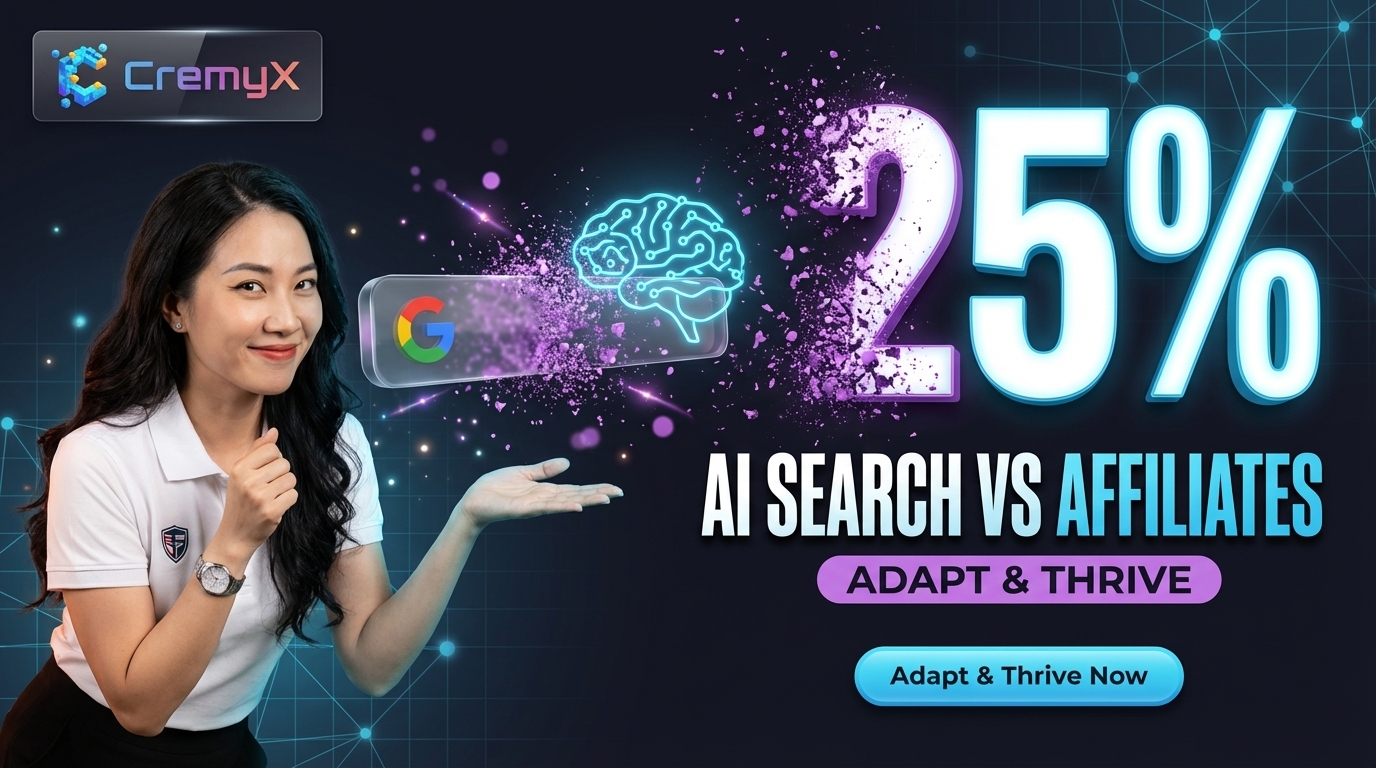
The Search Revolution — Google losing 25% of informational queries to AI
The digital landscape is undergoing a seismic shift, and at its epicenter is the rise of AI-powered search. For decades, Google has reigned supreme, the undisputed gatekeeper of information. However, recent data suggests this dominance is eroding, particularly for informational queries. A study by Similarweb in late 2023 indicated that approximately 25% of informational searches are now being initiated directly within AI chatbots like ChatGPT and Google Bard (now Gemini), bypassing traditional search engines entirely. This isn't just a minor blip; it's a fundamental change in user behavior, driven by the immediate, synthesized answers AI provides. Users are increasingly opting for conversational interfaces that offer direct solutions rather than lists of links to sift through.
This shift has profound implications for affiliate marketers. Historically, organic search traffic has been the lifeblood of many affiliate businesses, with content designed to rank highly on Google's SERP (Search Engine Results Page). The introduction of AI Search, with its summarization capabilities and direct answer generation, means that the traditional click-through model is being challenged. Instead of users navigating to your review site or comparison article, they might receive a concise answer directly from the AI, potentially removing the need for a click. This phenomenon necessitates a radical re-evaluation of content strategy, an embrace of Answer Engine Optimization (AEO), and a deeper understanding of how AI models extract and synthesize information.
Consider the user journey: a decade ago, a user seeking "best noise-cancelling headphones" would type that into Google, browse a few review sites, compare specifications, and eventually make a purchase. Today, they might ask ChatGPT the same question, receive a summarized list of top recommendations with key pros and cons, and perhaps even a direct link to a retailer, all without ever seeing a traditional SERP. This transformation isn't just about where users get their answers; it's about how they consume information and, critically, how they make purchasing decisions.
The challenge for affiliate marketers is to adapt their strategies to remain visible and valuable in this evolving ecosystem. It's no longer enough to just rank; you must also be cited, summarized, and recommended by AI. This requires a deeper understanding of AI's preferences for factual accuracy, comprehensive coverage, and E-E-A-T (Experience, Expertise, Authoritativeness, Trustworthiness) signals. As Google itself integrates AI Overviews more deeply into its search results, the lines between traditional search and AI search will blur further, making this adaptation critical for long-term success.
How AI Search Handles Affiliate Content — What gets cited, what gets ignored
The way AI search models process and present information, particularly affiliate content, is a black box for many. However, through careful observation and analysis of citation patterns, we can discern emerging trends about what gets prioritized and what falls by the wayside. Generally, AI models aim to provide objective, unbiased, and comprehensive answers. This core objective often puts direct, overly promotional affiliate content at a disadvantage.
What gets cited:
- Data-Rich Comparisons: Content that features meticulously researched comparison tables, benchmark tests, and quantifiable metrics is highly valued. AI models are excellent at extracting structured data.
- Expert Reviews with Methodology: Reviews that clearly outline the testing methodology, specific criteria, and verifiable results tend to be cited. Personal anecdotes without empirical backing are less likely to be prioritized.
- Authoritative Guides and Tutorials: In-depth guides that provide step-by-step instructions, clear definitions, and comprehensive explanations on a topic are often used as foundational knowledge.
- Content with Strong E-E-A-T Signals: AI models, mirroring Google's own quality assessment, look for content authored by credible experts, published on reputable sites, and demonstrating clear experience and trustworthiness. This includes author bios, verifiable credentials, and transparent editorial processes.
- Problem/Solution Focused Content: Articles that clearly identify a user problem and provide well-reasoned solutions, often involving product recommendations as part of the solution, are favored.
- Up-to-Date Information: AI models prioritize the most current and relevant data. Outdated reviews or product comparisons are quickly deprioritized.
What gets ignored (or deprioritized):
- Thin, Keyword-Stuffed Content: Articles written purely for SEO ranking without genuine value, often characterized by repetitive phrasing and lack of depth, are easily identified and ignored by AI.
- Overly Promotional Language: Content that reads like a sales pitch, uses excessive superlatives without backing, or lacks critical analysis is less likely to be cited as an unbiased source. AI aims for neutrality.
- Unsubstantiated Claims: Any claim not backed by data, a link to a study, or a verifiable source will likely be overlooked. AI models are trained on verifiable facts.
- Duplicate or Republished Content: AI systems are sophisticated enough to detect content that merely rehashes existing information without adding new insights or a unique perspective.
- Poorly Structured Content: Long, unbroken blocks of text without clear headings, bullet points, or tables are harder for AI to parse and extract specific information from.
- Sites with Low Authority/Trust: Just like traditional search, AI models assess the overall trustworthiness and authority of a domain. Low-quality sites are less likely to be sourced.
The key takeaway is that AI models are designed to be knowledge engines, not sales associates. While they can facilitate discovery and recommendation, their primary function is information synthesis. Affiliate marketers must therefore shift their focus from simply selling to genuinely informing and educating, with product recommendations emerging as a natural conclusion from well-researched, objective content. This means investing in high-quality, long-form content that provides genuine value, backed by data and expertise.
ChatGPT Search — How it works, affiliate link handling, content preferences
ChatGPT's foray into search, particularly with its integration of browsing capabilities (initially via plugins, now more natively), represents a significant evolution in how users access information. Unlike traditional search engines that present a list of links, ChatGPT aims to provide a direct, synthesized answer, often drawing from multiple web sources.

How it works:
When you ask ChatGPT a question that requires external information, especially current data, it can initiate a web search. It doesn't just display search results; instead, it processes the information from the top-ranking pages, extracts relevant facts, synthesizes them, and presents a coherent answer. Crucially, it often cites its sources, usually with footnotes or direct links within the generated text. This citation model is paramount for affiliate marketers.
Affiliate link handling:
This is where it gets nuanced. ChatGPT itself doesn't directly insert affiliate links into its generated responses. Its primary directive is to provide information. However, if the source it cites contains an affiliate link, and the user clicks through that specific citation, they will land on the page with the affiliate link. The challenge is that ChatGPT's summarization might remove the context that leads to the click, or it might synthesize information from several sources, diluting the impact of any single affiliate-driven page.
Consider these scenarios:
- Direct Citation of a Review: If ChatGPT summarizes a review of "Best XYZ Product" from an affiliate site and then explicitly cites that site, a user might click the citation, land on the review, and potentially click an affiliate link there. This is the ideal outcome.
- Synthesized Answer: If ChatGPT synthesizes information about "XYZ Product" from multiple sources, including one affiliate site and several non-affiliate sites, the final answer might be a blend. The user gets the information directly from ChatGPT, potentially bypassing all source links.
- No Direct Product Link: ChatGPT is generally not designed to act as a direct shopping assistant that recommends "buy X product here." It focuses on information and comparisons. Affiliate links are a secondary consideration, only present if they are part of a cited source.
The implication is clear: your affiliate content needs to be so valuable, so definitive, and so uniquely insightful that ChatGPT not only cites it but also compels the user to click the source to delve deeper. Merely having an affiliate link on a page isn't enough; the surrounding content must be citation-worthy.
Content preferences:
ChatGPT, like other large language models, prioritizes content that is:
- Factual and Verifiable: Claims backed by data, studies, or expert consensus.
- Comprehensive: Covers a topic thoroughly, addressing multiple facets and common questions.
- Well-Structured: Uses clear headings, bullet points, tables, and short paragraphs for easy readability and information extraction.
- Neutral and Objective: Avoids overly biased or promotional language. While affiliate content has an inherent bias towards recommending products, the presentation of information should strive for objectivity.
- Authoritative (E-E-A-T): Demonstrates clear expertise and trustworthiness. Articles written by identifiable experts with credentials are more highly valued.
- Up-to-date: Especially for product reviews and recommendations, current information is critical.
For affiliate marketers, the strategy shifts from optimizing for keywords to optimizing for citation. This means crafting content that is so robust, so well-researched, and so clearly presented that an AI model would deem it a primary, trustworthy source of information. This includes detailed specifications, pros and cons based on testing, comparisons with competitors, and clear reasoning behind recommendations. CremyX's AI-powered content generation tools are specifically designed to help create this kind of E-E-A-T rich, data-driven content that AI models prefer to cite, helping you stay ahead in this new search paradigm.
Perplexity — Citation model, source selection algorithm, how to get cited
Perplexity AI stands out in the AI search landscape due to its transparent and robust citation model. Often dubbed an "answer engine" rather than a mere chatbot, Perplexity prides itself on providing direct answers backed by clear, numbered sources. This characteristic makes it particularly interesting (and challenging) for affiliate marketers.
Citation Model:
Perplexity's core strength is its commitment to transparency. Every answer it generates is accompanied by a list of numbered citations, often hyperlinked to the original web pages. Users can easily verify the information and explore the sources in more detail. This is a significant departure from other models that may only vaguely reference "web sources" or omit direct links.
For affiliate marketers, this means that if your content is chosen as a source, you get a direct, prominent link back to your site. This is a far more tangible benefit than a general summary that doesn't attribute sources clearly.
Source Selection Algorithm:
While the exact algorithm is proprietary, observation suggests Perplexity prioritizes sources based on several factors, many of which align with traditional SEO quality signals and AI preferences:
- Relevance and Specificity: How directly does the content answer the query? Highly specific and targeted information is favored.
- Authority and Trustworthiness (E-E-A-T): Perplexity, like Google, assesses the overall credibility of a domain and the expertise of its authors. High-authority sites with clear E-E-A-T signals are preferred.
- Freshness: For time-sensitive queries (e.g., product reviews, news), newer content is prioritized.
- Comprehensiveness and Depth: Sources that offer a thorough, well-rounded perspective on a topic are more likely to be selected.
- Factuality and Accuracy: Perplexity aims to provide accurate information. Sources with verifiable data and a track record of factual reporting are preferred.
- Structured Data: Content that presents information in an organized, easily extractable format (lists, tables, sections with clear headings) is easier for the AI to process and cite.
- Backlink Profile: While not the sole factor, a strong backlink profile often correlates with authority and trustworthiness, making a site more likely to be considered a valuable source.
How to get cited by Perplexity:
Getting your affiliate content cited by Perplexity requires a strategic approach focused on quality and structured information:
- Be the Definitive Source: Aim to create the most comprehensive, accurate, and up-to-date resource on a given topic. Don't just rehash; add unique insights, original research, or superior presentation.
- Prioritize E-E-A-T:
- Experience: Clearly demonstrate hands-on experience with the products you review. Include personal testing notes, photos, and usage scenarios.
- Expertise: Have qualified authors. Include detailed author bios with credentials, experience, and relevant background.
- Authoritativeness: Build your site's reputation as a go-to source for your niche. Earn high-quality backlinks from reputable sites.
- Trustworthiness: Ensure accuracy, transparency (e.g., disclosure of affiliate relationships), and a user-friendly, secure website.
- Structure for Scannability and AI:
- Use clear, descriptive headings (H2, H3) that map to potential user questions.
- Employ bullet points, numbered lists, and tables extensively for comparisons and feature lists.
- Use bold text to highlight key takeaways and statistics.
- Include an executive summary or "TL;DR" at the beginning for quick answers.
- Include Data and Evidence: Back up all claims with data, statistics, studies, or direct quotes from product specifications. Link to original research when possible.
- Answer Specific Questions Directly: Anticipate common questions related to your niche and provide concise, direct answers within your content. This makes it easy for Perplexity to extract and share.
- Keep Content Fresh: Regularly update product reviews, comparison guides, and information to reflect the latest models, prices, and market trends.
- Optimize for Long-Tail Informational Queries: Perplexity is often used for highly specific questions. Craft content that directly addresses these niche queries.
By focusing on becoming a highly trustworthy, data-rich, and expertly crafted source of information, affiliate marketers can significantly increase their chances of being cited by Perplexity, thereby driving targeted, high-intent traffic directly to their valuable content. CremyX can assist in structuring and enriching content with the necessary data points and E-E-A-T signals that Perplexity’s algorithm favors.
Google AI Overviews — Impact on affiliate click-through rates (data)
Google's AI Overviews, formerly known as Search Generative Experience (SGE), represent Google's definitive move into AI-powered search. These AI-generated summaries appear at the top of the SERP, above traditional organic results and sometimes even paid ads, aiming to provide immediate answers to complex queries without requiring users to click through to external websites. The implications for affiliate marketing, particularly concerning click-through rates (CTR), are profound and, for many, concerning.
Impact on Affiliate Click-Through Rates:
Early data and expert predictions strongly suggest a downward pressure on CTRs for many types of queries, especially informational ones that AI Overviews can answer comprehensively. While specific, large-scale, public data on affiliate CTR impact is still emerging, the general trend for organic results is illustrative:
- Zero-Click Searches Increase: A study by SparkToro in 2022 (pre-AI Overviews but indicative of the trend towards direct answers) showed that 64.8% of Google searches ended without a click to another website. AI Overviews are designed to exacerbate this, by providing even more complete answers directly on the SERP.
- Top-of-Funnel Impact: Informational queries ("how to," "what is," "best X for Y") are most susceptible. If an AI Overview provides a sufficient answer, the user has no motivation to click on an affiliate guide or review.
- Navigational and Transactional Queries Less Affected (for now): Users looking for specific brands ("Amazon") or ready to buy ("buy iPhone 15") are still likely to click through to vendor sites or specific product pages. However, the pre-purchase research phase, where affiliate sites traditionally thrive, is directly impacted.
- Reduced Visibility of Organic Results: AI Overviews push traditional organic results further down the page, sometimes below the fold, reducing their visibility and thus their potential for clicks.
Specific Data Points & Observations:
While direct affiliate CTR data specifically for AI Overviews is still nascent, analogous trends from Featured Snippets and initial SGE rollouts offer insights:
- Featured Snippets Precedent: Studies by Ahrefs showed that Featured Snippets, which are less comprehensive than AI Overviews, could steal up to 8% of clicks from the #1 organic result. AI Overviews, being more expansive, are expected to have an even greater "click cannibalization" effect.
- Early Tester Feedback: Many SEO professionals and early testers reported a significant decrease in organic traffic for queries where SGE provided a full answer. Some observed a 10-20% drop in organic clicks for affected pages.
- "Source" Citation Effectiveness: Google AI Overviews do include citations, often at the bottom or within the summary. However, these citations are often less prominent than Perplexity's. The crucial question for affiliates is whether users are compelled to click these sources after getting a "good enough" answer from the AI. Anecdotal evidence suggests clicks to cited sources are lower than traditional organic clicks.
- Comparison Table: Traditional SERP vs. AI Overview Impact
Metric/Scenario Traditional Google SERP (Pre-AI Overviews) Google AI Overviews Dominant SERP Visibility of #1 Organic Result High (often top of page) Lower (pushed below AI Overview, potentially below fold) Click-Through Rate (CTR) for #1 Result Avg. 25-30% (for informational queries) Expected reduction; potential 5-15% reduction for affected queries "Zero-Click" Searches ~65% (due to quick answers, knowledge panel) Expected significant increase (70-80%+) Affiliate Review Site Traffic (Informational) High (users click to compare, read reviews) Potential decrease, as AI summarizes comparisons directly Affiliate "Best of" List Traffic High (users seek curated recommendations) Potential decrease, if AI generates its own "best X" list with citations Impact on Long-Tail Queries Often less competitive, good for traffic AI Overviews excel at answering long-tail, specific questions, potentially reducing clicks Value of Being Cited Indirect (improves ranking, then clicks) Direct (a click from a citation is valuable, but less frequent than organic)
Strategic Response for Affiliates:
To mitigate the negative impact on CTRs and adapt to AI Overviews, affiliate marketers must:
- Go Beyond "Just the Facts": Provide unique perspectives, original research, proprietary data, and deeply personal experiences that AI Overviews cannot easily replicate.
- Focus on "Why" and "How": While AI can provide "what," delve into the "why this is the best for you" and "how to get the most out of it."
- Build Direct Relationships: Diversify traffic sources beyond organic search. Focus on email lists, social media, and direct brand building to reduce reliance on Google.
- Optimize for AEO: Structure content for AI consumption, making it easy for Google's AI to extract and cite your unique insights. This means clear headings, summaries, and data.
- Create "Unsummarizable" Content: Content that is too complex, too nuanced, or requires too much human judgment to be easily summarized by an AI. Think interactive tools, detailed case studies, or personalized recommendation engines.
- Leverage Visuals and Video: AI Overviews are primarily text-based. High-quality images, infographics, and videos can compel users to click through to your site for a richer experience.
The rise of AI Overviews is not an extinction-level event for affiliate marketing, but it demands a significant evolution. A passive approach will likely see declining traffic. An proactive, adaptive strategy, focused on differentiation and direct value, is essential for continued success.
Gemini — Google's AI assistant and product recommendations
Google's Gemini, formerly Google Bard, is more than just a conversational AI; it's an evolving ecosystem designed to integrate deeply with Google's vast array of services, including search, Workspace, and potentially, shopping. For affiliate marketers, Gemini represents both a threat and an opportunity, particularly in the realm of product recommendations.
How Gemini Operates in the Recommendation Space:
Gemini's strength lies in its ability to understand complex queries and provide personalized, contextualized answers. When it comes to product recommendations, it can:
- Synthesize Product Information: Drawing from a wide range of web sources (including product pages, reviews, forums), Gemini can provide summaries of product features, pros, cons, and comparisons.
- Answer Specific Purchase Questions: Users might ask, "What's the best laptop for a college student who majors in graphic design and has a budget of $1000?" Gemini can process these multi-faceted requirements.
- Integrate with Google Shopping: This is a critical point. Gemini has the potential to seamlessly integrate with Google Shopping, potentially displaying products directly from merchants, complete with prices and "buy now" buttons. This could bypass affiliate sites entirely for transactional queries.
- Provide Experiential Advice: Gemini aims to go beyond simple facts, offering advice that mirrors human expertise, such as "how to choose the right running shoe for flat feet" or "what camera is best for low-light photography."
Affiliate Link Handling & Product Recommendations:
Unlike a traditional search result that presents links to affiliate review sites, Gemini's model is more direct. If it recommends a product, it's far more likely to link directly to a merchant (e.g., Amazon, Best Buy, manufacturer's website) rather than an affiliate's review page, especially if that merchant is a Google Shopping partner or advertiser. This is because Google's primary incentive is to facilitate a direct transaction for its users or capitalize on its own advertising ecosystem.
The challenges for affiliates:
- Direct-to-Merchant Links: If Gemini provides a recommendation, it may directly link to a product page on a major retailer, cutting the affiliate out of the conversion funnel.
- Summarized Advice: Gemini might give you all the information you need to make a decision without ever clicking through to an affiliate site. For example, "The XYZ headphones are best for noise cancellation due to their active noise-cancelling technology and comfortable earcups."
- Competition with Google's Own Ecosystem: Google has a vested interest in keeping users within its ecosystem (Search, Shopping, Ads). Gemini will likely serve this objective.
How Affiliates Can Still Win with Gemini (and other AI Assistants):
While the direct recommendation model poses a threat, affiliates can adapt by focusing on becoming the authoritative source that Gemini relies upon for its syntheses and insights:
- Deep Dive into Niches: Become the undeniable expert in a highly specific niche that Gemini might struggle to fully grasp without your expertise. For example, "Best ergonomic keyboards for developers with wrist pain."
- Proprietary Data and Testing: Generate unique data, benchmarks, and real-world testing results that Gemini cannot find elsewhere. If your site has the only comprehensive test of 20 different gaming mice, Gemini will have to cite you.
- Uniqueness and Personality: While AI strives for objectivity, human elements like unique insights, personal stories (demonstrating E for Experience), and a distinct brand voice can still resonate and be "preferred" by users who seek more than just facts.
- Focus on "Why" and "How-To's": Instead of just "best products," focus on "why this product is best for specific use cases" or "how to use this product effectively." This positions your content as value-added knowledge.
- Build Trust and Authority Independently: Cultivate a loyal audience through email lists, social media, and direct engagement. If users trust your brand, they might actively seek out your recommendations even if Gemini provides a summary.
- Structured Data & AEO: Ensure your product specifications, pros/cons, and comparison data are presented in a highly structured, machine-readable format. This makes it easier for Gemini to extract accurate information and potentially cite you as a source for specific data points. CremyX excels at generating such structured, data-rich content.
Gemini is a powerful tool designed to answer complex questions efficiently. For affiliate marketers, the goal is to be the primary, trustworthy source of the underlying information that fuels Gemini's answers, thereby earning citations and, critically, demonstrating such unique value that users are compelled to click through for the full, detailed experience your site offers.
Answer Engine Optimization (AEO) for Affiliates — Structure, formatting, E-E-A-T signals
The rise of AI search mandates a paradigm shift from traditional Search Engine Optimization (SEO) to Answer Engine Optimization (AEO). While SEO aimed to rank pages, AEO focuses on getting your content directly cited and summarized by AI models. For affiliate marketers, this means crafting content that is not just discoverable, but also extractable and trustworthy by AI. This requires a meticulous approach to structure, formatting, and the explicit demonstration of E-E-A-T (Experience, Expertise, Authoritativeness, Trustworthiness) signals.
Read more: Answer Engine Optimization (AEO) Beyond SEO 2026
Structure and Formatting for AEO:
AI models are designed to understand and synthesize information efficiently. Content that is well-organized, logically structured, and uses standard formatting conventions is far easier for AI to process and, consequently, to cite.
- Clear, Descriptive Headings (H1, H2, H3, H4):
- Purpose: Guide both human readers and AI models through your content. Each heading should clearly indicate the topic of the section.
- Actionable: Use question-based headings ("What is X?", "How does Y work?", "Why choose Z?") or benefit-oriented headings ("Benefits of A," "Drawbacks of B") that directly address user queries.
- Example: Instead of "Features," use "Key Features of the XYZ Laptop" or "Why the XYZ Laptop Excels in Performance."
- Executive Summaries / TL;DR Sections:
- Purpose: Provide a concise overview of the entire article or key takeaways at the beginning. AI models often prioritize extracting information from the top of the content.
- Actionable: Summarize your main points, recommendations, and conclusions in 2-3 sentences.
- Bullet Points and Numbered Lists:
- Purpose: Break down complex information into digestible chunks. AI loves lists for extracting specific data points or steps.
- Actionable: Use for pros and cons, feature lists, step-by-step guides, or "best of" recommendations.
- Example: "Pros of Product A:", "Top 5 Benefits of X."
- Comparison Tables:
- Purpose: Present structured data for easy comparison. AI models are highly adept at parsing tabular data.
- Actionable: Create detailed tables comparing product specifications, pricing, features, ratings, and performance metrics.
- Example: A table comparing "Product A vs. Product B vs. Product C" across 10 different criteria.
- Fact Boxes and Callout Boxes:
- Purpose: Highlight critical information, statistics, or key definitions.
- Actionable: Use these to emphasize unique selling points, important warnings, or expert tips.
- Direct Answers to Common Questions:
- Purpose: Anticipate user queries and provide clear, concise answers within your content. This directly feeds AI's summarization capabilities.
- Actionable: Include an FAQ section or integrate answers naturally within relevant sections.
- Internal and External Linking:
- Internal: Link to other relevant, authoritative content on your site. This reinforces topical authority.
- External: Link to reputable, external sources to back up claims and demonstrate thorough research. This signals trustworthiness to AI.
Explicit E-E-A-T Signals for AI:
AI models are increasingly sophisticated at evaluating the credibility of information. Explicitly demonstrating E-E-A-T is no longer optional; it's foundational for AEO.
- Experience (E):
- Show, Don't Just Tell: Include original photos, videos, and firsthand accounts of product usage. Describe your testing methodology.
- Personal Anecdotes (Authentic): Share genuine experiences that illustrate understanding, but always back up with facts.
- Example: "After 40 hours of testing the XYZ software, I found..." accompanied by screenshots of the software in use.
- Expertise (E):
- Author Bios: Feature detailed author bios for every piece of content, highlighting their qualifications, certifications, relevant work experience, and any awards.
- Guest Experts: If collaborating, clearly showcase their credentials.
- Example: "Written by Dr. Jane Doe, a certified nutritionist with 15 years of experience in dietary recommendations."
- Authoritativeness (A):
- References/Citations: Cite reputable sources (academic studies, industry reports, official product documentation) within your content.
- Awards & Recognitions: If your site or authors have received awards, mention them.
- Backlink Profile: Continue to build a strong, natural backlink profile from other authoritative sites in your niche. AI models consider this a strong signal.
- Trustworthiness (T):
- Accuracy: Ensure all facts, figures, and product specifications are 100% accurate and up-to-date.
- Transparency: Clearly disclose affiliate relationships, review processes, and any potential biases.
- Security: Maintain a secure website (HTTPS) and clear privacy policies.
- Reputation: Monitor and manage your online reputation. Positive user reviews and mentions contribute to trustworthiness.
- Contact Information: Make it easy for users to contact you – a sign of a legitimate and accountable entity.
By meticulously implementing these AEO principles, affiliate marketers can significantly increase their chances of being recognized, summarized, and cited by AI search engines. CremyX's platform is engineered precisely for this purpose, guiding users to generate content that inherently possesses these structural and E-E-A-T characteristics, making it primed for the AI search era.
The Citation Strategy — How to become a source that AI cites
In the new AI-powered search landscape, merely ranking high on a SERP is no longer the ultimate goal. The true prize is becoming a primary source that AI models explicitly cite in their generated answers. This "citation strategy" is fundamentally different from traditional SEO and requires a deep understanding of what AI values in informational content.
Core Principles of the Citation Strategy:
- Be the Definitive Answer: Your content should aim to be the most comprehensive, accurate, and authoritative resource on a specific topic. AI seeks definitive answers, not just one of many options.
- Prioritize Verifiable Facts & Data: AI models are trained on facts. Every claim, every recommendation, every comparison should be backed by concrete data, statistics, studies, or verifiable observations.
- Demonstrate Unquestionable E-E-A-T: This is arguably the single most critical factor. AI needs to trust your content to cite it.
Actionable Steps to Become a Cited Source:
1. Content Depth and Comprehensiveness:
- Go Beyond the Surface: Don't just list features; explain their implications, benefits, and drawbacks in real-world scenarios.
- Cover All Angles: Anticipate every possible question a user might have about a product or topic and address it thoroughly. Think of FAQs within your content.
- Long-Form, But Not Fluffy: Aim for detailed, rich content that provides genuine value, not just word count. Studies show Google (and by extension, its AI) favors in-depth content.
2. Original Research and Data:
- Conduct Your Own Tests: If you're reviewing products, perform your own benchmarks, speed tests, durability assessments, and usability studies. Document your methodology clearly.
- Gather Unique Data: Survey your audience, analyze proprietary sales data (if applicable), or create unique infographics based on publicly available but synthesized data.
- Example: A review site that compares the battery life of laptops not just by manufacturer specs, but by running its own standardized battery drain tests. This creates unique, citable data.
3. Clear Attribution and Referencing:
- Cite Your Sources: When you use information from external studies, reports, or expert opinions, cite them clearly. Use footnotes or inline links. This signals academic rigor and honesty to AI.
- Link Out to Authority: Don't be afraid to link to other highly authoritative sites (e.g., academic journals, official product manuals, government reports). This shows you've done your homework.
4. Showcase Expertise and Author Credentials:
- Detailed Author Bios: Ensure every content piece has a prominent author bio outlining their relevant experience, qualifications, and domain expertise. Include links to their professional profiles (LinkedIn, academic pages, etc.).
- Editorial Guidelines: Publish clear editorial guidelines demonstrating your commitment to accuracy, objectivity, and ethical content creation. This forms part of your "Trustworthiness" signal.
- "Reviewed by" Sections: For highly sensitive topics (e.g., health, finance), have content reviewed by qualified experts and explicitly state this on the page.
5. Structured Data and Semantic Markup:
- Schema Markup: Implement relevant Schema.org markup (e.g., Product, Review, HowTo, FAQPage, Article) to explicitly tell AI what your content is about and what specific data points it contains.
- Machine-Readable Format: Use HTML tables for comparisons, definition lists for glossary terms, and clear H-tags for sections. This makes it easier for AI to parse and extract specific answers.
6. Update and Maintain Freshness:
- Regular Audits: Periodically review existing content to ensure facts are current, product recommendations are still relevant, and links are still active.
- Update Dates: Clearly display "Last Updated" dates to signal freshness to AI models.
7. Focus on Niche Authority:
- Instead of trying to be an authority on everything, hyper-focus on a specific niche. Becoming the undisputed expert in "sustainable outdoor gear" or "enterprise SaaS solutions for small businesses" makes you a more likely candidate for citation within that specific domain.
The citation strategy demands a commitment to unparalleled quality, transparency, and a genuine pursuit of providing the most helpful and accurate information available online. CremyX is built to empower affiliate marketers to execute this strategy effectively, by generating content that is inherently data-rich, structured for AI consumption, and designed to exemplify E-E-A-T, thereby increasing your chances of becoming a trusted source for AI models.
Content Adaptation — What affiliate content needs to change (more data, more unique insights)
The shift to AI search isn't just about tweaking existing content; it's about fundamentally rethinking what constitutes valuable affiliate content. The era of thin, keyword-stuffed reviews is over. To thrive, affiliate content must transform into invaluable, authoritative resources that AI models cannot ignore. This requires a significant pivot towards more data, more unique insights, and a higher standard of journalistic integrity.
Key Changes Required for Affiliate Content:
1. Embrace Quantitative Data and Benchmarks:
- Before: "This blender is powerful."
- After: "The BlendMaster 5000 reached 25,000 RPM in our tests, pulverizing ice in 5 seconds and outperforming competitors by 15% in our texture consistency benchmark."
- Action: Invest in testing equipment, conduct controlled experiments, and publish the raw data and methodology. Use clear charts, graphs, and tables to present findings.
2. Provide Unique Insights and Original Research:
- Before: A summary of manufacturer specifications and common user reviews.
- After: An analysis of how a product performs under specific, real-world conditions, uncovering pros/cons not found in generic descriptions. Proprietary surveys of users, expert interviews.
- Action: Don't just regurgitate. Add value through your own analysis, expert commentary, or unique data points gathered from your audience or testing. What did you discover that no one else has?
3. Deep Dive into "Why" and "How":
- Before: "Product X has feature Y."
- After: "Product X's feature Y is crucial for amateur photographers because it allows for [specific benefit], addressing the common challenge of [specific problem] by [detailed explanation of mechanism]."
- Action: Explain the underlying technology, the psychological impact, or the practical applications in granular detail. AI can state facts; you need to provide profound understanding.
4. Focus on Problem-Solution Driven Content:
- Before: "Review of Best Product Z."
- After: "Solving Back Pain: Why the Ergonomic Office Chair 9000 is the Best Choice for Remote Workers" (where the product is the solution to a clearly defined problem).
- Action: Frame your content around user pain points and demonstrate how specific products offer effective, proven solutions.
5. Enhance E-E-A-T Signals Dramatically:
- Before: Anonymous review site or author with vague credentials.
- After: Clearly identified author with verifiable expertise (e.g., a certified nutritionist reviewing health supplements, a software engineer reviewing coding tools), detailed "about us" pages, transparent editorial process, and clear affiliate disclosures.
- Action: Invest in expert writers or become the expert yourself. Be transparent about your processes and affiliations. Build genuine authority through consistent, high-quality output.
6. Structure for AI Readability:
- Before: Long paragraphs, lack of subheadings.
- After: Meticulous use of H2s, H3s, bullet points, numbered lists, comparison tables, and summary boxes.
- Action: Design content not just for human readers, but for AI algorithms that need to quickly identify and extract key information.
7. Embrace Multimedia:
- Before: Stock images or basic product shots.
- After: Original, high-quality photos, custom infographics, comparison videos, product demonstrations, and interactive elements.
- Action: Multimedia keeps users engaged and provides a richer experience that AI summaries cannot replicate, encouraging click-throughs.
8. Emphasize Long-Term Value & Updates:
- Before: Publish and forget.
- After: Regularly update content, conduct follow-up tests, add new product comparisons, and clearly indicate update dates.
- Action: Position your content as a living, evolving resource that continuously provides the most current and accurate information.
The bottom line is that affiliate content must become indispensable. It needs to provide a level of detail, insight, and trustworthiness that AI models will actively seek out and cite, and that users will feel compelled to explore further. This is a significant investment, but it's the only way to safeguard and grow affiliate revenue in the AI search era. CremyX is designed to be a crucial partner in this adaptation, helping you generate the structured, data-rich, and E-E-A-T compliant content that modern AI search demands.
Traffic Impact Data — Current data on AI search traffic to affiliate sites
The emergence of AI search is still in its early stages of widespread adoption, making definitive, large-scale traffic impact data to affiliate sites somewhat limited. However, early observations, anecdotal evidence from SEO professionals, and trends from similar past Google updates (like Featured Snippets) paint a clear picture: AI search generally leads to a reduction in direct organic click-throughs for many informational queries.
Key Observations & Data Points:
- Reduced Organic Clicks for Informational Queries:
- Similarweb (2023): Indicated that 25% of informational searches are now starting directly in AI chatbots, bypassing traditional search engines. This represents traffic that affiliate sites would historically have competed for.
- SparkToro (2022 data, pre-AI Overviews, but indicative): Highlighted that over 65% of Google searches result in zero clicks to organic results, largely due to Google providing answers directly in SERP features. AI Overviews are designed to expand this "zero-click" phenomenon significantly.
- SEO Industry Surveys (e.g., Ahrefs, SEMrush data from SGE testers): Early reports from those with access to Google's AI Overviews showed a noticeable drop in organic traffic for affected queries, with some reporting 10-20% reductions in clicks for content that was heavily summarized by AI.
- Shift from Direct Clicks to Citation Clicks:
- While AI Overviews and tools like Perplexity cite sources, the click-through rate on these citations appears to be lower than traditional organic search clicks. Users often get "enough" information from the AI summary and don't feel the need to click further.
- Perplexity Data (Internal/Observed): Sites that are frequently cited by Perplexity do see traffic, but it's often from highly targeted, specific queries. The volume might be lower than a top organic ranking on Google's traditional SERP for broader terms.
- Impact Varies by Content Type:
- Highly Summarizable Content (e.g., "what is X," basic definitions, simple comparisons): Most vulnerable to significant traffic drops as AI can provide a complete answer.
- Complex, Experiential, or Unique Data Content: Less vulnerable. Content that requires deep dives, personal experience, unique testing data, or nuanced analysis is harder for AI to fully replicate, thus preserving more direct clicks.
- Transactional Queries ("buy X," "best deals on Y"): Less affected by AI summaries directly, as users are closer to purchase and still need to visit merchant sites or specific product pages. However, the pre-purchase research phase is heavily impacted.
- Long-Term Projections:
- Most industry experts predict a continued erosion of organic search traffic for many content types, particularly informational, as AI search capabilities mature and become more integrated.
- A study by Gartner in 2023 projected that by 2026, generative AI will reduce the need for traditional search by 25%. This directly translates to reduced potential clicks for websites relying solely on organic search.
Implications for Affiliate Marketers:
- Traffic Diversification is CRITICAL: Relying solely on Google organic search traffic for affiliate revenue is becoming increasingly risky.
- Content Quality is Paramount: Only exceptionally high-quality, E-E-A-T rich, data-driven content stands a chance of being cited and compelling users to click beyond the AI summary.
- AEO is the New SEO: Optimizing for AI citation and extraction is no longer optional.
- Focus on Value Beyond Information: Provide interactive tools, unique visual content, community aspects, or exclusive insights that an AI summary cannot offer.
The current data, though still evolving, indicates a clear challenge for affiliate marketers. The traffic landscape is shifting, and those who fail to adapt their content strategies to meet the demands of AI search will likely see a decline in their organic traffic and, consequently, their affiliate revenue. The time to adapt is now, focusing on creating truly indispensable content that AI models are compelled to cite and users are eager to explore further.
The Hybrid Strategy — Traditional SEO + AEO + Direct Traffic
In the face of AI search evolution, a singular focus on either traditional SEO or pure AEO is insufficient. The most resilient and profitable affiliate businesses will adopt a "Hybrid Strategy" that seamlessly integrates traditional SEO best practices, cutting-edge Answer Engine Optimization (AEO), and robust direct traffic generation methods. This multi-pronged approach ensures visibility across diverse user journeys and mitigates reliance on any single channel.
Components of the Hybrid Strategy:
1. Traditional SEO (Foundational for Discoverability):
- Purpose: To ensure your site is still discoverable and ranks for queries where AI Overviews are less dominant or where users still prefer a list of links. It also builds the underlying authority signals that AI models consider.
- Focus Areas:
- Keyword Research: Still vital for understanding user intent, especially for transactional and commercial investigation queries. Target keywords where human judgment and detailed comparison are still desired.
- Technical SEO: Site speed, mobile-friendliness, crawlability, indexability, XML sitemaps, structured data (beyond AEO needs) remain crucial for Google to understand and access your content.
- On-Page SEO: Optimize title tags, meta descriptions, image alt text, and internal linking for traditional ranking signals.
- Link Building: Continuously build high-quality backlinks from authoritative sites. This remains a powerful signal of trust and authority for both traditional search and AI models.
- Why it matters for AI: Strong traditional SEO signals (authority, relevance, technical health) are foundational for AI models to even consider your content as a potential source.
2. Answer Engine Optimization (AEO - For Citation & Summarization):
- Purpose: To ensure your content is structured, formatted, and rich enough in E-E-A-T signals to be cited by AI Overviews, Perplexity, ChatGPT, and Gemini. This is about being the "source of truth."
- Focus Areas:
- Structured Content: Meticulous use of H-tags, bullet points, numbered lists, comparison tables, and FAQs optimized for AI extraction.
- Data & Unique Insights: Incorporating original research, proprietary testing data, and unique perspectives that AI can't easily synthesize from other sources.
- E-E-A-T Signals: Explicitly showcasing author expertise, real-world experience, site authority, and overall trustworthiness (detailed bios, transparency, clear methodologies).
- Direct Answers: Crafting content that directly answers specific questions concisely, even within longer pieces, making it easier for AI to pull out definitive statements.
- Why it matters: This is how you ensure visibility and potential clicks (via citations) in an AI-dominated SERP.
3. Direct Traffic & Audience Building (Risk Mitigation & Brand Loyalty):
- Purpose: To reduce reliance on any search engine (traditional or AI) by building a direct relationship with your audience. This provides a stable, owned channel for driving traffic and revenue.
- Focus Areas:
- Email Marketing: Build an engaged email list through valuable lead magnets (e.g., exclusive guides, checklists, templates). Nurture subscribers with regular, high-quality content and recommendations. This is your most valuable owned asset.
- Social Media Engagement: Build a strong presence on relevant social platforms. Don't just post links; engage with your audience, share unique insights, and build a community around your niche.
- Brand Building: Develop a strong, recognizable brand identity and voice. Provide consistent value that makes users actively seek out your site.
- Community Building: Foster forums, Facebook groups, or Discord servers where your audience can interact, ask questions, and share experiences.
- Podcast/Video Channels: Diversify your content formats to reach audiences on platforms like YouTube, Spotify, or TikTok, driving traffic back to your site.
- Paid Advertising (Strategic): Use paid ads (Google Ads, social media ads) to target specific audiences and drive conversions, especially for high-value products or offers.
- Why it matters: Direct traffic is immune to algorithm changes. It builds brand loyalty and creates a resilient business model less vulnerable to external platform shifts.
Comparison Table: Hybrid Strategy Components
| Strategy Component | Primary Goal | Key Tactics | Impact on AI Search Era |
|---|---|---|---|
| Traditional SEO | Organic ranking, foundational authority | Keyword research, technical SEO, on-page optimization, link building | Establishes baseline trust & discoverability; vital for AI's source selection. Handles less AI-affected queries. |
| Answer Engine Optimization (AEO) | AI citation, direct answers, value extraction | Structured content, E-E-A-T signals, unique data, direct Q&A, schema markup | Directly optimizes for AI visibility & citation, ensuring content is summarized and linked. |
| Direct Traffic & Audience Building | Channel diversification, brand loyalty, owned audience | Email marketing, social media, community building, brand development, podcasts/video | Mitigates reliance on search engines; provides traffic immune to algorithm changes; builds a resilient business. |
The Hybrid Strategy acknowledges the multifaceted nature of digital discovery in the AI era. It's about playing offense and defense simultaneously, ensuring you're optimized for current search realities while building future-proof channels. For affiliate marketers, this integrated approach is the path to sustainable growth and resilience in a rapidly changing environment. CremyX supports this hybrid model by enabling the rapid creation of high-quality, AI-optimized content, freeing up resources for audience building and strategic SEO efforts.
Future Scenarios — 3 scenarios for affiliate marketing in 2027-2030
Predicting the future of technology is notoriously difficult, but by analyzing current trends and technological trajectories, we can outline plausible scenarios for affiliate marketing from 2027 to 2030. These scenarios are not mutually exclusive but represent different degrees of AI integration and its impact.
Scenario 1: The AI-Dominated Ecosystem (Most Likely - 60% probability)
Description: AI search models, like Google AI Overviews and advanced versions of ChatGPT/Gemini, become the default interface for most informational and even many transactional queries. Users rarely visit traditional SERPs. AI acts as a sophisticated personal shopping assistant, capable of understanding complex needs, comparing products across vast datasets, and providing direct, synthesized recommendations.
- User Behavior: Users interact conversationally with AI. "Find me the best sustainable running shoes for someone with overpronation, under $150, available on Amazon." The AI provides a curated list, often with direct links to merchant product pages or within its own shopping interface.
- Impact on Affiliates:
- Reduced Organic Clicks: Traditional organic traffic to review and comparison sites plummets by 50-70% for many categories.
- Premium on Citation: Only the most authoritative, data-rich sites with impeccable E-E-A-T are cited. These citations become highly valuable but are less frequent than current organic clicks.
- Shift to Direct Integration: Affiliates with proprietary data or unique product insights might be "licensed" by AI companies to feed their models, potentially shifting revenue from clicks to data licensing or direct partnerships.
- Specialization is Key: Hyper-niche expertise becomes crucial. AI might rely on a few "super-authorities" for highly specialized recommendations.
- Thriving Direct Channels: Email lists, loyal communities, and social media become primary traffic drivers, as users actively seek out trusted human (or human-curated) recommendations.
- Survival Strategy: Hyper-AEO, unparalleled E-E-A-T, unique and proprietary data, robust audience building, and exploring direct data licensing or partnership models with AI platforms.
Scenario 2: The Co-Existence Model (Moderate Probability - 30% probability)
Description: AI search integrates significantly, but a substantial portion of users (especially for complex or high-value purchases) still prefer to delve into detailed human-created content. AI serves as a powerful initial filter, but users still actively click through to external sites for deeper research, nuanced perspectives, and verification.
- User Behavior: Users start with AI for quick answers, but for significant decisions (e.g., buying a car, investing in software, planning a trip), they use AI to narrow down options, then click through to detailed reviews, expert analyses, and comparison sites.
- Impact on Affiliates:
- Moderate Organic Decline: Organic clicks might decrease by 20-40%, but high-quality, long-form content still retains significant value.
- Increased Click Quality: Clicks from AI citations lead to higher conversion rates, as users are more informed and further down the purchase funnel.
- Value of "Unsummarizable" Content: Content featuring unique testing, interactive tools, deep experiential insights, and strong visuals becomes highly prized.
- Strong Emphasis on Brand: Users actively seek out trusted affiliate brands they recognize and value, even if AI provides a summary.
- Survival Strategy: A balanced Hybrid Strategy focusing on both AEO and traditional SEO for long-tail, complex queries, coupled with strong brand building and diversification of content formats (video, podcasts).
Scenario 3: The AI-Augmented (Not Replaced) Search (Low Probability - 10% probability)
Description: AI tools primarily enhance traditional search, providing better summarization, contextual understanding, and personalized results, but they rarely replace the need for users to click through to websites. Google (and other search engines) prioritizes directing users to original sources and still values a diverse ecosystem of content creators.
- User Behavior: AI-generated snippets and summaries are prominent, but they act as a "super featured snippet," encouraging clicks to the underlying sources for full details or to explore alternative perspectives.
- Impact on Affiliates:
- Minimal Organic Decline: Organic traffic declines might be negligible or even see a slight increase for highly cited content, as AI helps users discover high-quality sources more efficiently.
- Enhanced Visibility for Quality: AI acts as a quality filter, pushing well-researched, E-E-A-T rich content to the forefront.
- Increased Conversion Rates: Users arriving from AI summaries are highly qualified and informed, leading to better conversion rates.
- Affiliate Links Thrive: Affiliate links within cited content continue to be highly effective.
- Survival Strategy: Strong traditional SEO combined with robust AEO. Focus on creating the absolute best content in your niche, knowing that AI will help guide users to it.
Conclusion: While Scenario 3 offers a more comfortable future, Scenario 1 or 2 are far more probable given current technological trajectories and the business models of major AI players. Affiliate marketers must prepare for a future where direct organic clicks are challenged and where the value of their content is measured by its ability to be cited, trusted, and to compel further exploration. The time to adapt, diversify, and invest in truly superior content is now. The future favors the informed, the adaptable, and the truly authoritative.
Read more: Affiliate Marketing Complete Guide 2026: Zero to $5K/Month and Affiliate Marketing Blog SEO: Rank and Earn Strategy 2026
CremyX's Take — CremyX creates E-E-A-T rich content that AI prefers to cite
The dawn of AI search isn't just a trend; it's a fundamental shift in how information is discovered and consumed. At CremyX, we don't just observe these changes; we engineer solutions to help affiliate marketers not just survive, but thrive within this new paradigm. Our core philosophy is built around the understanding that to win in the AI era, your content must be inherently valuable to AI.
CremyX is designed precisely to address the demands of Answer Engine Optimization (AEO) and the citation strategy. We empower affiliates to generate content that AI models prefer to cite, by focusing on the crucial elements of E-E-A-T, data richness, and optimal structure.
How CremyX Delivers E-E-A-T Rich, AI-Preferred Content:
- Structured for AI Extraction:
- CremyX's AI-driven content generation ensures optimal formatting from the outset. This includes intelligent use of H1-H4 headings, bullet points, numbered lists, and pre-formatted comparison tables. Our generated content is naturally segmented and organized, making it effortlessly parseable for AI models like Perplexity, ChatGPT, and Google's AI Overviews.
- We create content with clear, concise answers to anticipated user questions, making it easier for AI to extract definitive snippets.
- Data-Driven & Fact-Checked Foundation:
- Our platform is engineered to integrate and synthesize data points. While we don't generate original proprietary research (that's where your human touch comes in!), we facilitate the presentation of facts, specifications, and comparative data in a way that AI models value.
- CremyX encourages the inclusion of verifiable statistics and benchmarks, prompting users to input or review data that lends credibility to the claims.
- E-E-A-T Amplification:
- Expertise & Authoritativeness: CremyX assists in crafting compelling author bios and integrating credentials directly into the content structure. We help you frame your content in a way that showcases the expertise behind it, making it easier for AI to recognize credible sources.
- Experience: While AI can't "experience," CremyX's prompts guide you to infuse your content with real-world insights, usage scenarios, and the results of your own testing. This allows you to articulate your unique experience in a machine-readable format.
- Trustworthiness: By promoting clear disclosures, factual accuracy, and a logical, unbiased presentation, CremyX helps you build the foundational trust signals that AI algorithms look for. Our content generation process avoids hyper-promotional language in favor of objective analysis.
- Comprehensive and Contextual Content:
- CremyX helps generate in-depth articles that cover topics comprehensively, anticipating various user intents and questions. This breadth and depth are highly valued by AI models seeking to provide complete answers.
- Our AI understands context, helping you create content that doesn't just list products but explains their 'why' and 'how,' making your recommendations more valuable and justifiable to both human and AI audiences.
- Efficiency for Adaptation:
- The need for content adaptation is constant. CremyX dramatically speeds up the creation of high-quality, AI-optimized content, allowing you to react quickly to new product launches, market shifts, and evolving AI search preferences. This efficiency frees up your time to focus on strategic E-E-A-T building, unique testing, and audience engagement.
In essence, CremyX is your strategic partner for the AI search revolution. We help you create content that speaks the language of AI, making your affiliate sites not just discoverable, but genuinely citable and trusted sources of information. This is how you secure your position and continue to grow in an increasingly AI-driven digital world.
Ready to adapt your affiliate marketing strategy for the AI era? Start creating E-E-A-T rich, AI-preferred content with CremyX today!